Showing posts with label UK. Show all posts

Tuesday, February 5, 2013

Confusion Reigns Over UK Defence Spending Plans


Confusion Over Defence Spending Plans

David Cameron's plan for Armed Forces 2015 Effective Spending plunged into confusion Were today as the Defence Secretary was Unable to confirm apparent commitment to year above-inflation budget rises.

Senior sources Have Indicated que le Prime Minister Would Deliver real-terms rises in the Ministry of Defence budget Effective 2015.

Have Been tensions growing in the Coalition negotiations begin as over how to save billions of pounds more in the 2015-16 Spending Review.

Philip Hammond, the Defence Secretary, Who has seen his budget slashed Already by 8% in real terms since 2010, is Believed to be Among Ministers further Top resisting cuts.

However, falling on the Prime Minister's trip to North Africa it was signalled That he "does not resile" from comments he made in October 2010, When He Appeared to accept defense Spending That Had to start rising again from 2015 onwards.

Saturday, February 2, 2013

UK Urban Warrior Army conducts five virtual simulation exercise


Soldiers from the British Army 2nd Battalion The Royal Welsh (2 R WELSH) Have Conducted a virtual simulation exercise, code-named Urban Warrior 5, at the Land Warfare Centre in Warminster, UK.

A total of 190 soldiers practised multiple scenarios under supervision of a sophisticated system of computers and advanced simulation software falling on the exercise, Which Represented the army 's largest ever virtual simulation drill.

The resulting and data will now be analysed by the UK Ministry of Defence's (MoD) Defence Science and Technology Laboratory (Dstl) and simulation program developer, Niteworks Partnership, to create a simulation model for determination of the Army's future requirements.

Wednesday, January 23, 2013

Britain to axis up to 5.300 army jobs


The British government said on Tuesday it was making up to 5.300 army staff redundant as share of cuts troop numbers That Will see Reduced to the Lowest since the early 19th century.

The Ministry of Defence Said soldiers returning from Afghanistan or heading to Would Be free from the cuts, the third round under Such a program will see That the regular army troops Reduced from 102.000 to 82.000 by 2020.

"WHILST we need to make up to 5.300 army staff redundant, the program will not adversely affect operations in Afghanistan," junior defense minister Mark Francois insisted in a statement to parliament.

Britain still HAS about 9.000 troops in Afghanistan ahead of a scheduled withdrawal in 2014.

The Conservative-led coalition government of Prime Minister David Cameron, Which is trying to shrink Britain's massive deficit, HAS Already Announced That Will Be Doubled reservist numbers to 30,000 by 2018 to help fill the shortfall.

Monday, January 21, 2013

Babcock completes HMWHS component delivery for UK Queen Elizabeth-class carrier


Babcock has delivered the final pair of hydraulically-operated lift doors for the highly mechanised weapons handling system (HMWHS) in support of the UK Royal Navy's second Queen Elizabeth-class aircraft carrier, HMS Prince of Wales.

Capable of providing mechanical handling facilities to connect the magazines, hangar, weapon preparation area and flight deck, the HMWHS also provides weapons lift capabilities for moving palletised munitions around the deep magazine and weapon preparation areas.

Before delivering the components for installation, the doors underwent factory acceptance testing to validate all operational movements and sensors, as well as seals with a grease or chalk test.

The seals will now undergo further water pressure testing, following completion of the installation phase.

Aimed at reducing through-life costs and enhancing safety, the technology uses automated systems with all-electric control, adapted for safe transport and stowage of munitions in a warship environment.

Babcock senior project manager Jayne Page said the doors would enable munitions to be delivered in bulk to the point of use at rates that could not be achieved by manual handling.

"The overhead handlers, for the preparation areas and store, are currently in detail design and will be delivered towards the end of the installation phase," Page added.

London and Washington to send troops to exclude the Maghreb


British and American Ministers of Defence said they were determined to fight Saturday against the actions of Al-Qaeda in the Maghreb during a press conference devoted to the hostage crisis in Algeria, but they excluded send troops in the region.

U.S. Secretary of Defense Leon Panetta and his British counterpart Philip Hammond have refused to criticize the management of the Algiers hostage on the site of gas In Aménas. It ended Saturday in the blood after a new intervention Algerian forces against the kidnappers, members of a group close to Al-Qaeda

Algerians "are in the area, they understand the terrorist threat certainly better than many other countries. I think it is important to continue to work with them to develop a regional approach," said U.S. Secretary of Defense , visiting London as part of a European tour.

This loss of life during the taking of hostages "are appalling and it must be clear that it is the terrorists who bear full responsibility," commented Philip Hammond for his part, stressed that "each country had different approaches. "

"We are determined to defeat terrorism and to be alongside the Algerian government," he added.

He launched a warning to "those behind the attack and must be fully convinced that the power of the United States, the United Kingdom and their allies will befall them and they will no place to hide. "

Friday, January 18, 2013

Britain says Gives medium to strong French Mali Mission


Britain is giving strong Logistical Support in Mali, Where France is leading international efforts to repel Islamic rebels, Europe Minister David Lidington said.

"We have Given the Logistical Support our Which French partners have asked for," he Told reporters on arrival at a meeting of foreign affairs Ministers in Brussels, Reuters reports.

Monday, January 14, 2013

UK to provide logistical military assistance to Mali


The UK is to provide logistical military assistance to Mali in order to help control rebel and extremist groups in the north of the country.

On Saturday, 12 January, the British Prime Minister, David Cameron, spoke to President François Hollande of France about how the UK can support French military assistance being provided to the Malian government to contain rebel and extremist groups in the north of the country.

As a result of this, the UK has offered, at French request, 2 transport aircraft to help quickly transport foreign troops and equipment to the West African country.

The UK Prime Minister and the Foreign Secretary, William Hague, have confirmed that no British forces will be involved in a combat role at all.
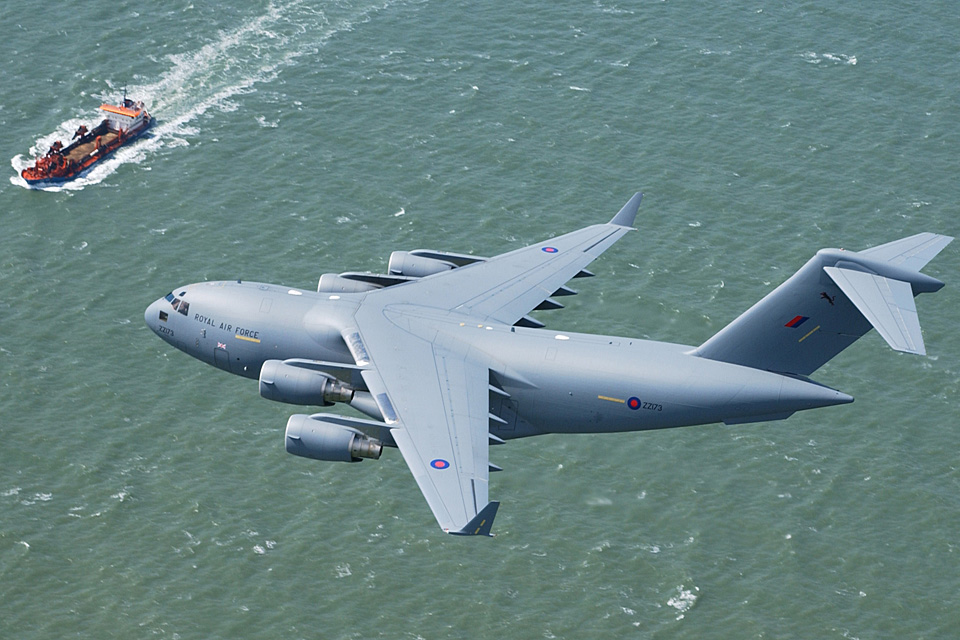
An RAF C-17 in flight
An RAF C-17 in flight (stock image) [Picture: Sergeant Jack Pritchard, Crown Copyright/MOD 2002]
Speaking over the weekend, UK Foreign Office Minister Mark Simmonds said that the UK has been concerned, alongside the international community, about the situation in northern Mali for some time. He explained that the northern part of Mali is controlled by Al-Qaeda and other terrorist organisations, and that potentially poses a direct threat to the UK and regional stability.

Mr Simmonds said:
We’re working with the United Nations, where there have been 2 resolutions, and the African Union and ECOWAS, which is the African regional organisation, to provide both an immediate and a long term sustainable solution to the challenge that is faced in Mali.

Saturday, January 12, 2013

Royal Navy to face surveillance, transport helicopter shortages


The UK Royal Navy will encounter a potential four-year gap in its ability to deliver organic airborne surveillance and control (ASaC) services late this decade, following the retirement in 2016 of its last Westland Sea King helicopters, the government's National Audit Office (NAO) has warned.

Thirteen Sea King 7 ASaC aircraft are operated by the RN's Fleet Air Arm, with the type having provided airborne early warning cover from surface ships and also currently flying overland surveillance missions in support of operations in Afghanistan. Nicknamed "Baggers", the helicopters carry a Thales Searchwater radar.

The Ministry of Defence's "Crowsnest" effort to buy a replacement capability should enter its assessment phase this year, with current plans calling for some of the RN's upgraded AgustaWestland Merlin HM2 multimission helicopters to be adapted to carry an ASaC equipment fit. Options are believed to include integrating systems currently flown aboard the Sea King, or ordering a new mission system from Lockheed Martin, including active electronically scanned arrays being developed by Northrop Grumman using technology also found on Lockheed's F-35 Joint Strike Fighter.

In its annual Major Projects Report, published on 10 January, the NAO says the RN also faces the prospect of a two-year gap in its commando helicopter force capability, between the retirement of its Sea King HC4/4+ transports (one picture above) and the full availability of an upgraded fleet of Merlin HC3/3As, which are due to be transferred from Royal Air Force ownership in 2014-15.

"The department is examining alternative means of closing these capability gaps," the government's spending watchdog says. A replacement ASaC system would be available in time to coincide with the operational availability of the RN's first of a possible two 65,000t Queen Elizabeth-class aircraft carriers, according to its four-year estimate.

Meanwhile, the report also reveals that the Merlin HM2 upgrade programme encountered a four-month schedule slip during its 2011-12 study period. This was due to a suspension of about three months of non-operational flight activities involving the type from November 2011, plus new certification demands imposed by the UK Military Aviation Authority, it says.

Friday, January 11, 2013

New pistols for UK Armed Forces


The Armed Forces are to be supplied with more than 25,000 new Glock sidearms to replace the ageing Browning pistols currently in service.

The Glock 17 Gen4 pistol is not only much lighter than the Browning L9A1, it is also more accurate and its magazines can carry more bullets. It has an increased magazine capacity of 17 rounds, compared to 13 rounds for the Browning.
Personnel across all 3 Services will begin to receive the new 9-millimetre (mm) calibre Glock 17s in the coming weeks and troops deployed to Afghanistan will be among the first to use the new weapon. The contract with Viking Arms Ltd of Harrogate, Yorkshire, also includes more than 25,000 holsters.

A Glock 17 pistol (left) and the Browning the new pistols will replace [Picture: Andrew Linnett, Crown Copyright/MOD 2013]
Warrant Officer Class 1 Mark Anderson, Royal Marines, who trialled the new weapon before the contract was awarded, said:
Pistols are vital in close combat and are a key part of a soldier’s armoury. Reliable, light and easy to carry, the Glock inspires confidence and performs exceptionally well.
The Minister for Defence Equipment, Support and Technology, Philip Dunne, said:
We are determined to provide our troops with the best possible personal kit available and these new Glock 17s will give them greater firepower and accuracy on operations.


Royal Marines firearms instructor Sergeant Steve Lord demonstrates the new Glock pistol on the range at Woolwich Barracks in London [Picture: Andrew Linnett, Crown Copyright/MOD 2013]
Sidearms are a valuable weapon for servicemen and women on the battlefield, and the new Glock, manufactured in Austria, will complement the wide range of weapons already available to our forces, which includes:
  • SA80A2 assault rifles, which fire 5.56mm rounds
  • light machine guns, which fire 5.56mm rounds
  • Sharpshooter rifles, which fire 7.62mm rounds
  • general purpose machine guns, which fire 7.62mm rounds
  • combat shotguns, which fire 12-gauge cartridges; and
  • sniper systems, which fire 8.59mm rounds.
The Glock pistols will replace the Browning which after being used by the Armed Forces for more than 40 years has become increasingly expensive to maintain. The contract for a replacement pistol was put out to tender 2 years ago and is not in response to any specific or increased threat.

Back to intervention Franco-British Aviation Security


http://www.defense.gouv.fr/var/dicod/storage/images/base-de-medias/images/air/actualites/images-2013/images-janvier-2013/un-avion-de-chasse-rafale/2131290-1-fre-FR/un-avion-de-chasse-rafale.jpgThe Air Force and the Royal Air Force worked closely during the interception of civil aircraft in the night of 5 December 2012. The speed and success of this action have demonstrated the effectiveness of bilateral agreements in terms of air defense. Story of a top-flight response.

It is 22:45, December 5, when the center en route air navigation (CRNA) Brest contact center detection and control (CDC) Cinq-Mars-la-Pile to report an aircraft flying Cognac, loss of radio contact and London Luton, Great Britain. In just a few minutes, the Rafale's plot MASA (active measures aviation security) deployed off Lorient order of the national center for air operations (CNOA) of Lyon Mont-Verdun to fulfill its mission of air policing.

The Rafale, under the control of Cinq Mars la Pile, intercept civil aircraft, performs recognition measures distance visual observation and interrogation on the radio distress frequency without response.

Faced with this lack of radio communication of civil aircraft, the CDC French handed over to British control center Boulmer, to convey the situation and allow for further MASA out of the French airspace.


The Rafale then passes under British control until the interceptor English, one Eurofighter continue measures radio interrogation and coercion route. The Rafale leaves the device, then back under control CDC Cinq-Mars-la-Pile and returned to France, his mission successfully. The civilian aircraft was then boarded an air base north of London, to answer the reasons for his lack of radio contact over hundreds of miles.

Countering weapons proliferation


Issue

The spread of weapons of mass destruction (WMD) poses a threat to the UK and the international community. Indiscriminate trade in conventional arms and the use of chemical, biological, radiological and nuclear (CBRN) weapons and ballistic missiles raises serious humanitarian and security concerns.
We’re working around the world to champion and implement UK policies as set out in theNational Counter-Proliferation Strategy to prevent the spread of CBRN weapons and ballistic missiles.

Actions

The UK works with international partners and through organisations such as the UN, G8, NATO and the EU to reduce terrorists’ ability to create, obtain or use CBRN materials and technologies.

Counter-Proliferation Programme

One of the FCO’s tools to combat these threats is our Counter-Proliferation Programme. In the financial year 2012 to 13, the value of the programme is £3 million. This funding is used to support projects around the world which increase political will or technical capacity to reduce the threat of weapons proliferation.

National Counter-Proliferation Strategy

The government published its National Counter-Proliferation Strategy in March 2012. The strategy’s main aims are to deny terrorists the materials and expertise to make and use WMD; to stop countries such as Iran and North Korea from obtaining WMD or advanced conventional weapons; and to build up the International Atomic Energy Agency (IAEA)UN and other organisations and treaties that help us meet our goals through the international community and which help to protect global security and prosperity.

Chemical weapons

The UK supports the destruction of remaining chemical weapons stocks and works to encourage full national implementation of the Chemical Weapons Convention (CWC) by all countries. The Chemical Weapons Convention bans the development, production, stockpiling and use of chemical weapons.

Biological weapons

The UK has signed up to the global implementation of the Biological and Toxin Weapons Convention (BTWC). The purpose of the convention is to help prevent states acquiring or keeping biological and toxin weapons, and prevent them ever being used by states or terrorists.

The BTWC doesn’t have a verification system like that of the CWC. Participating countries are required to submit relevant data and declarations, or confidence-building measures, to the United Nations Office for Disarmament Affairs. This increases openness and gives participating countries confidence that others are complying with the convention. The UK’s confidence building measures are published on the Implementation Support Unit website.

Nuclear weapons

We are working towards nuclear disarmament. The UK is one of 189 states that have signed the Nuclear Non-Proliferation Treaty (NPT). The treaty aims to stop the spread of nuclear weapons and ultimately eliminate them. The NPT has three equally important ‘pillars’:
  • to work towards non-proliferation
  • to champion nuclear disarmament
  • to encourage the peaceful use of nuclear energy

Nuclear security

The UK will continue work to strengthen international nuclear security by:
  • improving the security of fissile materials
  • reducing the number of sites containing nuclear and radiological material
  • preventing the acquisition of proliferation-relevant information and expertise by terrorists
Through the successful development of the UK’s Global Threat Reduction Programme we are reducing the threats posed by nuclear and radiological materials and expertise in vulnerable locations worldwide.
We are also supporting the full implementation of UN Security Council Resolution 1540, which requires all states to refrain from supporting non-government agents from developing, acquiring, manufacturing, possessing, transporting, transferring or using nuclear, chemical or biological weapons and their delivery systems.
The UK also supports and contributes to the Global Partnership Against the Spread of Weapons and Materials of Mass Destruction, agreed at the G8 Summit at Kananaskis, Canada in 2002.

State programmes

Despite the international legal framework, conventions and treaties, some countries have active programmes to develop and produce WMD. Of particular concern is Iran’s nuclear programme; the Democratic People’s Republic of Korea’s nuclear programme and willingness to provide weapons to other countries; and Syria’s possession of chemical and biological weapons.

The UK works through various international organisations to seek peaceful means to reduce the threat from these programmes and the networks that support them.

Arms Trade Treaty

While there is a legitimate arms trade, there is also an urgent need for more effective and coherent international regulation of that trade. The UK is working to achieve an international arms trade treaty to provide clearer and more effective control of the illegal arms trade.

UN conference in July 2012 was unable to adopt an Arms Trade Treaty (ATT). However, the UK will continue to play a leading role in future negotiations to help to secure one. An ATT will help to reduce the flow of weapons from legitimate trade to the illicit market.

Further details on the UN process towards an ATT and submissions from states (including the UK’s views on an ATT) are available on the United Nations General Assembly website.

Export licensing

The UK has joined other governments around the world to pursue collective implementation of export controls to prevent the proliferation of WMD. The 4 main export control regimes are:
  • the Australia Group - designed to harmonise export control measures aimed at curtailing the unhindered proliferation of chemical weapons
  • the Missile Technology Control Regime - an informal and voluntary association of countries that share the goal of non-proliferation of unmanned delivery systems of WMD
  • the Nuclear Suppliers Group - responsible for making sure nuclear export controls work in practice
  • the Wassenaar Arrangement - established to promote transparency and greater responsiblity in transfers of conventional arms and dual-use goods and technologies
The UK’s regulatory authority responsible for assessing and issuing strategic export licences to UK exporters is the Export Control Organisation (ECO), part of the Department for Business, Innovation and Skills (BIS). Read more about the UK’s policies and procedures for controlling defence, security and dual-use strategic exports.

Background

The Nuclear Non-Proliferation Treaty (NPT) was born out of fear that the Cold War era would lead to a nuclear arms race and is still the basis of the international nuclear non-proliferation regime. All states are now party to it apart from India, Israel, Pakistan and South Sudan.

The NPT provides for a Review Conference every 5 years, both to review developments over the previous 5 years and to look ahead to the future. At the last Review Conference in 2010 a series of action plans were agreed to enhance implementation of the treaty.

The International Atomic Energy Agency was set up as the world’s ‘Atoms for Peace’ organisation in 1957 within the UN family, and supports the NPT. The agency is at the centre of international efforts to address Iran’s nuclear dossier and to ensure the benefits of safe and secure peaceful nuclear energy are accessible to everyone, not just to the developed world.

In March 2012, the Seoul Nuclear Security Summit assembled 53 countries, the UN, the EU, theIAEA and Interpol, to continue work to secure vulnerable nuclear material around the world within 4 years.
On 24 December 2008 in the UN General Assembly, 133 States voted in favour of a draft resolution ‘Towards an Arms Trade Treaty’. There was a clear majority view that, working together, the international community can shape an Arms Trade Treaty into an effective legally binding mechanism to regulate the international trade in arms.


Within the framework of the Common Foreign and Security Policy (CFSP), the EU applies restrictive measures in pursuit of the specific CFSP objectives set out in the Treaty on European Union. (see particularly Article 11)
The EU External Action website provides an overview of restrictive measures adopted in the framework of the CFSP that are currently in force.

The UN Security Council Sanctions Committees website contains links to the latest versions of all UN Security Council targeted sanctions lists. The individuals and entities included in these lists are subject to the relevant measures imposed by the Security Council, and all member states are obliged to implement these measures.
Each separate list is maintained by the relevant Security Council Committee.

U.K. Orders Anti-Sniper System For Use by Troops in Afghanistan

Britain has ordered a French-built anti-sniper system to help protect troops in Afghanistan, even as spending on military equipment to defeat the Taliban is in decline as the drawdown of combat troops gathers pace.

The U.K. Defence Ministry revealed in late December that it was spending around 5 million pounds ($8 million) on an urgent operational requirement (UOR) to provide troops with equipment that uses a laser to detect the glass lenses used by the Taliban on sniper rifle sights.

The purchase coincided with the MoD’s first public breakdown of how it had spent billions of pounds over the past four years equipping the military in Afghanistan and Iraq with UOR kits.

French company Cilas is due to begin deliveries of its SLD 500 system this week, having beat three other contenders for a deal signed Nov. 26, a company executive said.

The system is designed to spot snipers using optical sights by shining a laser in the direction of potential opponents. The system detects refraction when the laser hits the glass surface of a scope or binoculars.

The past year has seen a number of British troops killed or wounded by Taliban small arms fire.

The award to Cilas follows the MoD’s cancellation last year of another UOR small-arms detection program using lightweight acoustic systems carried by individual soldiers capable of pinpointing the location of rifle fire.

The program was axed midyear before a contractor was selected.

France’s Direction Générale de l’Armement procurement office funded much of the development of the SLD 500 but did not order it for the French Army. Several other countries have bought the system, the Cilas executive said. The U.S. Marine Corps purchased systems for evaluation but, as far as is known, did not buy the equipment for fielding.

News of the Cilas success follows an announcement by government officials during a trip to Afghanistan by British Prime Minister David Cameron just before Christmas that a further 230 million pounds would be spent on military equipment ahead of the withdrawal of combat troops by the end of 2014.

Wednesday, January 9, 2013

Are British Military Forces At Risk Of A 'Fatal' Cyber-Attack

British military at risk of 'fatal' cyber-attack, MPs warn
Defence select committee says there are worrying gaps in MoD's cyber-strategy and calls for urgent ministerial intervention
Britain's armed forces are at risk of being "fatally compromised" by a sustained cyber-attack because the military is dependent on technology that has no proven back-up, MPs have warned .
The potential vulnerability must be addressed urgently, according to the Commons defence select committee, as part of a broader effort across government to face up to the threats posed from cyberspace.
In a withering critique of the government's cyber-strategy, the committee concludes: "The government needs to put in place – as it has not yet done – mechanisms, people, education, skills, thinking and policies which take into account both the opportunities and the vulnerabilities that cyber presents. It is time the government approached this subject with vigour."
In the 2010 strategic defence and security review (SDSR) the coalition made cybersecurity a tier one priority, setting aside £650m to boost the UK's defences, support online safety campaigns, and provide extra investment at GCHQ, the government's electronic eavesdropping centre. All government departments were told to put cyber-defence at the top of their agendas.
The committee's report acknowledges much has been done since 2010 and praises the work of the Ministry of Defence's new top-secret Global Operations Security Control Centre, run by Air Commodore Tim Bishop. The centre has a mix of military, civilian and private contractors, including staff seconded from Fujitsu, BT and the defence firms EADS and Babcock.
Related Posts Plugin for WordPress, Blogger...